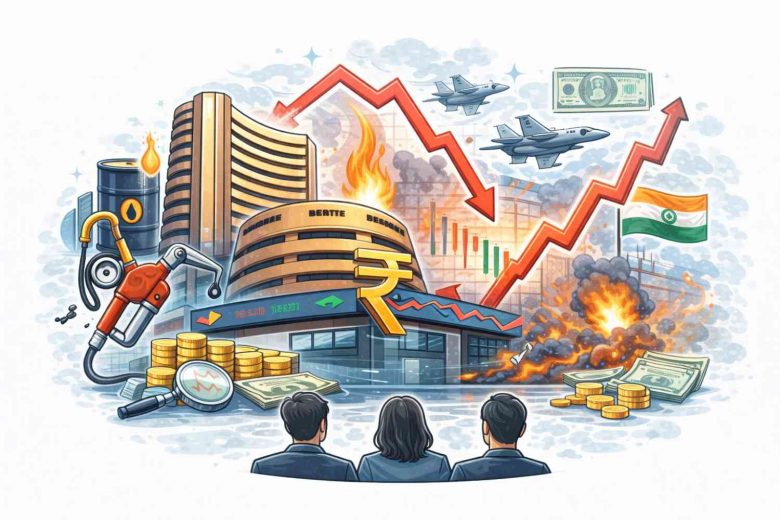
Mumbai, March 2, 2026 — Indian equity markets witnessed sharp volatility on Monday as escalating tensions in West Asia unsettled global investors and triggered risk-off sentiment across emerging markets.
Benchmark indices, including the BSE Sensex and the Nifty 50, opened lower and swung between gains and losses during intraday trade. Market participants cited rising crude oil prices and geopolitical uncertainty as key drivers behind the turbulence.
Oil Prices in Focus
India imports a significant portion of its crude oil requirement. Any disruption in West Asia — a key oil-producing region — tends to influence global crude benchmarks. Higher oil prices can widen India’s trade deficit, put pressure on the rupee, and raise concerns about inflation.
Energy and oil marketing stocks reacted sharply to crude price movements, while sectors sensitive to input costs, including aviation and paint manufacturers, saw selling pressure.
Rupee and Bond Market Impact
The Indian rupee weakened against the US dollar during early trade amid safe-haven demand for the greenback. Government bond yields edged higher as investors factored in potential inflationary pressures if crude prices remain elevated.
Currency traders noted that sustained geopolitical tensions could lead to foreign portfolio outflows from emerging markets, including India.
Sectoral Movement
Defensive sectors such as information technology and pharmaceuticals showed relative resilience. Analysts said export-oriented IT companies could benefit from currency depreciation if the rupee remains under pressure.
On the other hand, auto and banking stocks experienced volatility, reflecting broader investor caution.
Global Spillover Effect
Asian markets also traded lower, mirroring declines in global equities after developments in West Asia raised concerns about supply chain disruptions and broader regional instability.
Market strategists emphasised that while geopolitical events often create short-term turbulence, long-term trends are usually driven by domestic economic fundamentals.
Investor Advisory
Financial advisers suggest that retail investors avoid making abrupt portfolio decisions based solely on geopolitical headlines. Volatility, they note, is a common feature during global uncertainty.
Experts recommend focusing on asset allocation, diversification, and long-term investment goals rather than reacting to daily market swings.
Outlook Ahead
Much will depend on how the situation in West Asia evolves in the coming days. Any signs of de-escalation could stabilise global markets, while further escalation may keep volatility elevated.
For now, Indian markets remain sensitive to crude price movements, foreign fund flows, and global risk sentiment.
As trading continues this week, investors will closely track geopolitical developments alongside domestic economic data for clearer direction.
Last Updated on: Wednesday, March 4, 2026 9:46 am by Business Byte Team | Published by: Business Byte Team on Monday, March 2, 2026 9:48 pm | News Categories: GENERAL
About Author