The Union Budget 2026 marks a decisive evolution in India’s entrepreneurial strategy, signalling a transition from startup enablement to startup scaling. With focused interventions across manufacturing, artificial intelligence, services, and MSMEs, the Budget positions startups and small businesses as central drivers of economic growth, job creation, and global competitiveness. Startup Ecosystem: From Enablement to Scale …

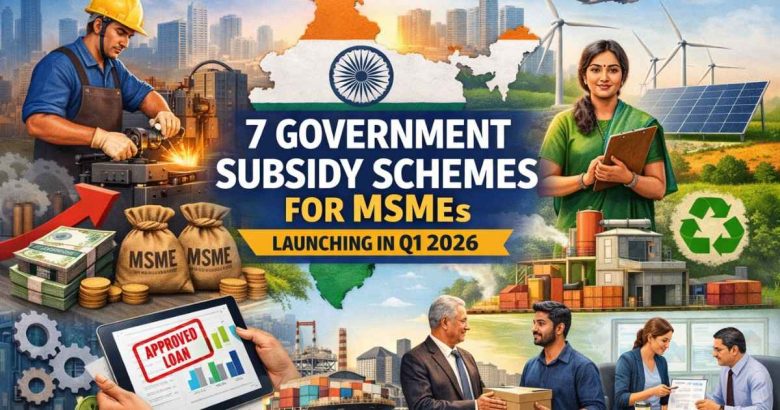
As India enters 2026 with a renewed focus on economic resilience and job creation, the government is preparing a fresh wave of subsidy and support schemes for micro, small and medium enterprises (MSMEs). Slated for rollout in the first quarter of the new financial year, these initiatives reflect a clear policy shift: moving beyond survival-focused …
The Union Budget 2026-27, presented by Finance Minister Nirmala Sitharaman on February 1, 2026, reinforces India’s Viksit Bharat vision through Yuva Shakti-driven growth, sustained capital expenditure of ₹12.2 lakh crore (3.1% of GDP), fiscal deficit targeted at 4.3%, and bold sectoral reforms. Key highlights include the launch of India Semiconductor Mission (ISM) 2.0 to focus …

In 2026, the global venture capital environment is more selective, data-driven, and narrative-conscious than at any point in the past decade. While capital continues to flow into innovation, particularly across AI, climate tech, deep-tech manufacturing, fintech infrastructure, and enterprise software, the bar for founders seeking to move from Seed to Series A has risen sharply. …
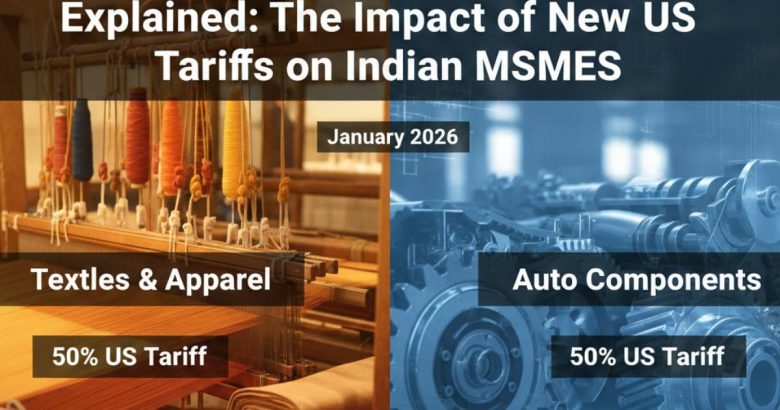
The recent decision by the United States to impose sharply higher tariffs on a range of imports from India has sent ripples through the country’s export ecosystem, with micro, small and medium enterprises (MSMEs) in textiles and auto components emerging as some of the most vulnerable. While the move is part of a broader recalibration …