As India moves deeper into 2026, early business indicators are beginning to offer a clearer sense of where growth momentum is taking shape across the economy. While the outlook remains uneven across sectors, a combination of macroeconomic data, policy signals and corporate activity suggests that certain industries are entering the year with stronger visibility and confidence than others. These early growth signals are being closely tracked by businesses and investors as they assess whether the current expansion can be sustained amid global uncertainty.
High-frequency indicators point to a gradual strengthening of overall economic activity. Private sector output, as reflected in composite business surveys, has rebounded after a brief slowdown at the end of last year, driven by improved new orders and a pick-up in services demand. This recovery is important because it signals that domestic consumption and enterprise activity are stabilising at levels that support expansion rather than merely recovery. At the same time, government tax collections continue to show year-on-year growth, indicating that formal economic activity and compliance remain resilient. For businesses, steady tax inflows are often read as confirmation that demand conditions are holding up beyond short-term seasonal effects.
Infrastructure and capital expenditure-led industries are among the clearest early beneficiaries of the current policy environment. With public capital spending remaining a central pillar of economic strategy, companies linked to construction, engineering, transport, logistics and core materials are seeing stronger order pipelines. The continued emphasis on highways, railways, urban infrastructure and energy networks is reinforcing expectations that public investment will continue to crowd in private participation. For many firms, this translates into longer project visibility and greater confidence to invest in capacity, equipment and skilled manpower.
Manufacturing is also showing signs of stabilisation, supported by both domestic demand and exports. Recent trade trends suggest that India’s services exports remain a key growth engine, while goods exports have begun to show incremental improvement after a volatile period. This combination is helping to diversify growth drivers and reduce dependence on any single market or sector. Within manufacturing, electronics, auto components and industrial goods are being closely watched as companies align production strategies with domestic consumption trends and global supply chain shifts.
The clean energy transition continues to emerge as a structural growth theme rather than a short-term opportunity. Renewable energy capacity additions remain strong, and investment interest is expanding beyond generation into transmission, storage and grid modernisation. Businesses operating in power equipment, engineering services and energy technology are positioning themselves for a multi-year cycle driven by policy commitments and corporate decarbonisation goals. The steady expansion of this ecosystem is creating demand across a wide range of ancillary industries, from metals and electricals to software and project management services.
Electric mobility is another area where early growth signals are becoming more pronounced. Vehicle sales data indicates accelerating adoption, particularly in urban markets, supported by improving charging infrastructure and a broader range of models. Corporate investment announcements in manufacturing and supply chains suggest that companies are planning for scale rather than experimentation. Although profitability remains a medium-term challenge for parts of the sector, sustained investment reflects growing confidence in demand visibility and long-term policy support.
Financial services are playing a critical enabling role in the evolving business outlook. Credit growth has remained healthy, particularly for small and medium enterprises, which are often the first to reflect changes in business sentiment. Recent regulatory measures aimed at expanding access to collateral-free lending and supporting formal financing channels are being viewed as positive signals for entrepreneurship and MSME expansion. Stable monetary policy conditions are further reducing uncertainty around borrowing costs, allowing firms to plan investments with greater clarity.
Digital consumption and payments continue to provide one of the most reliable indicators of economic activity. Transaction volumes through digital platforms remain at record levels, reflecting deepening adoption among households and small businesses. For the broader economy, this trend supports formalisation, transparency and efficiency, while also creating opportunities for fintech, banking and technology service providers. At the same time, rising regulatory focus on security and consumer protection is shaping the next phase of growth, pushing companies to balance scale with governance.
Real estate presents a more selective picture, but institutional segments linked to commercial assets and income-generating properties are attracting renewed attention. Policy and regulatory developments that support structured financing and investment vehicles are improving confidence in parts of the market with stable cash flows. This is likely to benefit associated industries such as construction materials, facilities management and professional services.
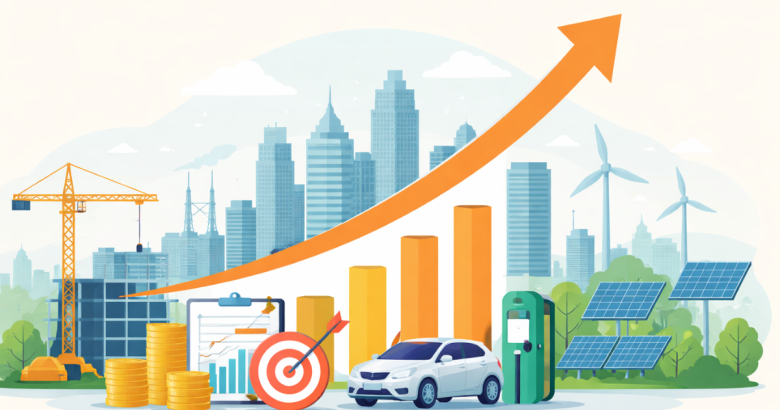
Taken together, India’s business outlook for 2026 is being shaped less by broad-based exuberance and more by targeted, data-backed signals of growth. Infrastructure-led investment, clean energy, electric mobility, digital payments, export-oriented services and MSME-focused finance are emerging as key areas with early momentum. The durability of this growth will depend on execution, global conditions and the ability of businesses to convert visibility into sustainable profitability. For now, the early indicators suggest that India’s economy is entering the year with a foundation that supports cautious optimism rather than speculative expansion.
Disclaimer: The information presented in this article is intended for general informational purposes only. While every effort is made to ensure accuracy, completeness, and timeliness, data such as prices, market figures, government notifications, weather updates, holiday announcements, and public advisories are subject to change and may vary based on location and official revisions. Readers are strongly encouraged to verify details from relevant official sources before making financial, investment, career, travel, or personal decisions. This publication does not provide financial, investment, legal, or professional advice and shall not be held liable for any losses, damages, or actions taken in reliance on the information provided.
Last Updated on: Friday, February 6, 2026 3:29 pm by Business Byte Team | Published by: Business Byte Team on Friday, February 6, 2026 3:29 pm | News Categories: GENERAL, Economy
About Author