
As the direct-to-consumer (D2C) sector matures, 2026 is shaping up to be a decisive year for brands reassessing how and where they grow. After a decade of aggressive expansion powered largely by third-party platforms—online marketplaces, social media apps, and quick-commerce aggregators—many D2C companies are confronting a hard truth: scale without control is expensive. Rising platform commissions, volatile algorithms, intensifying ad costs, and limited access to customer data are pushing brands to rethink their dependence on external ecosystems.
The new growth playbook is increasingly clear. Profitability in 2026 will belong to D2C brands that successfully migrate customers from rented digital real estate to owned channels—brand websites, mobile apps, direct communication pipelines, and community-driven ecosystems where the customer relationship is fully controlled. This strategic shift is not about abandoning marketplaces entirely, but about rebalancing power, margins, and long-term value.
Here are the five most profitable D2C strategies defining this transition in 2026.
The first and perhaps most critical strategy is the aggressive use of first-party data to drive hyper-personalisation. With tightening global privacy regulations and the gradual erosion of third-party cookies, brands are prioritising data collected directly from their own channels. In 2026, leading D2C players are using artificial intelligence to translate this data into deeply personalised customer experiences. Websites dynamically adapt to individual users, showing different product assortments, pricing offers, and content layouts depending on purchase history, browsing behaviour, and engagement patterns.
This shift is proving profitable because personalisation increases conversion rates while simultaneously reducing reliance on paid acquisition. Customers who feel understood by a brand are more likely to return, spend more frequently, and remain loyal. The result is higher lifetime value and improved margins—outcomes that are difficult to achieve within the rigid structures of third-party platforms.
A second defining strategy is the prioritisation of owned communication channels over platform-dependent reach. Email, SMS, WhatsApp, and brand mobile apps are no longer secondary marketing tools; they are central revenue engines. In 2026, successful D2C brands are designing their entire funnel to move customers from marketplaces or social media ads into direct communication ecosystems where ongoing engagement costs are minimal.
Mobile apps, in particular, have become a powerful profit lever. They enable faster checkout, personalised push notifications, integrated loyalty programs, and frictionless repeat purchases. Unlike social platforms, where visibility often requires continuous ad spend, owned channels allow brands to communicate directly with customers at near-zero marginal cost, dramatically improving return on marketing investment.
The third major strategy reshaping D2C profitability is community-led growth. Rather than treating customers as anonymous buyers, brands are increasingly building communities around shared values, lifestyles, and identities. In 2026, this approach extends beyond social media engagement to brand-owned communities, loyalty clubs, and co-creation platforms where customers participate in product feedback, content creation, and advocacy.
These communities foster trust and emotional attachment, transforming customers into long-term supporters rather than price-sensitive shoppers. From a business perspective, community-driven growth lowers customer acquisition costs, increases organic referrals, and creates a defensible brand identity that cannot be easily replicated by competitors or marketplaces.
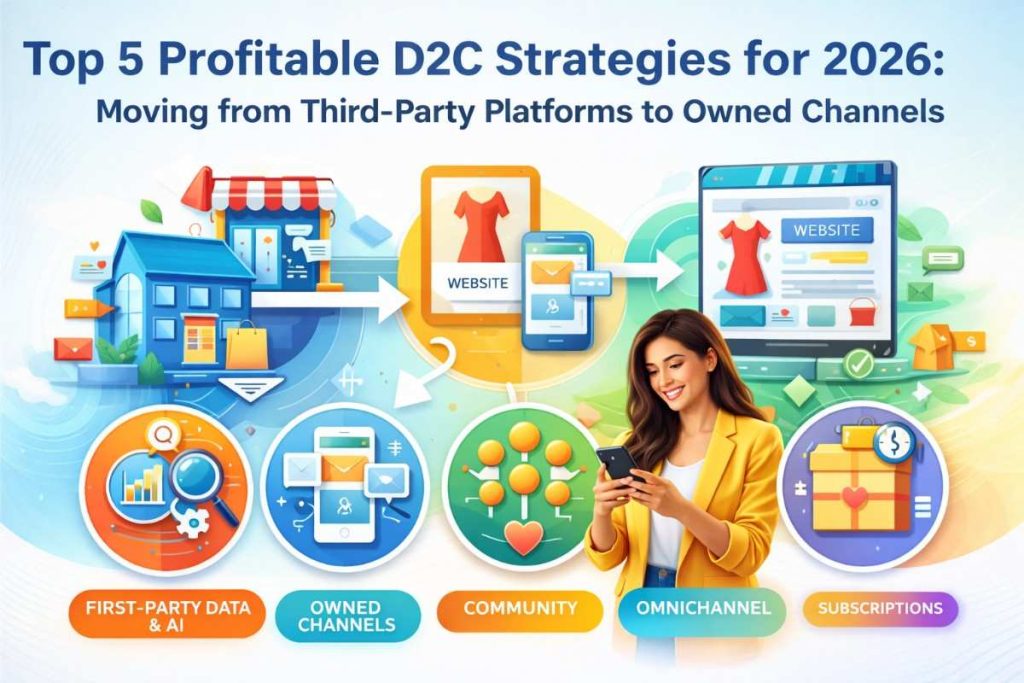
The fourth profitable strategy is the creation of seamless omnichannel experiences that connect digital and physical touchpoints. While D2C began as an online-first model, 2026 is witnessing a more integrated approach where physical experiences complement owned digital channels. Brands are experimenting with flagship stores, pop-ups, experiential showrooms, and offline events—not as standalone revenue drivers, but as extensions of their digital ecosystems.
These physical touchpoints are designed to funnel customers back into owned channels through digital onboarding, loyalty integration, and data capture. The result is a more holistic customer journey that builds trust, reduces purchase hesitation, and strengthens long-term engagement. By owning both the experience and the data, brands improve operational efficiency and profitability across channels.
The fifth and final strategy driving D2C profits in 2026 is the widespread adoption of subscription and retention-focused business models. Subscriptions, replenishment programs, and membership tiers are becoming central to revenue planning, particularly in categories such as personal care, nutrition, pet products, and fashion essentials. Predictable recurring revenue allows brands to forecast demand more accurately, optimise inventory, and reduce the pressure to constantly acquire new customers.
When these subscription models are anchored within owned channels, they become powerful profit engines. Customers enrolled in subscriptions tend to exhibit higher lifetime value, lower churn, and stronger brand loyalty, insulating businesses from the volatility of platform-driven sales cycles.
Taken together, these strategies point to a broader industry shift. The D2C brands that will thrive in 2026 are not those chasing the widest reach, but those building the deepest relationships. Marketplaces and social platforms will continue to play a role in discovery and scale, but true profitability increasingly lies in ownership—of data, of communication, of experience, and ultimately, of the customer relationship.
As competition intensifies and platform economics become less forgiving, moving from third-party dependence to owned channels is no longer optional. For D2C brands looking to build durable, profitable businesses in 2026 and beyond, it is fast becoming the defining strategic imperative.
Add businessbyte.in as a preferred source on google – Click Here
Last Updated on: Tuesday, January 27, 2026 10:58 am by Business Byte Team | Published by: Business Byte Team on Tuesday, January 27, 2026 10:58 am | News Categories: Trending, Startups
About Author